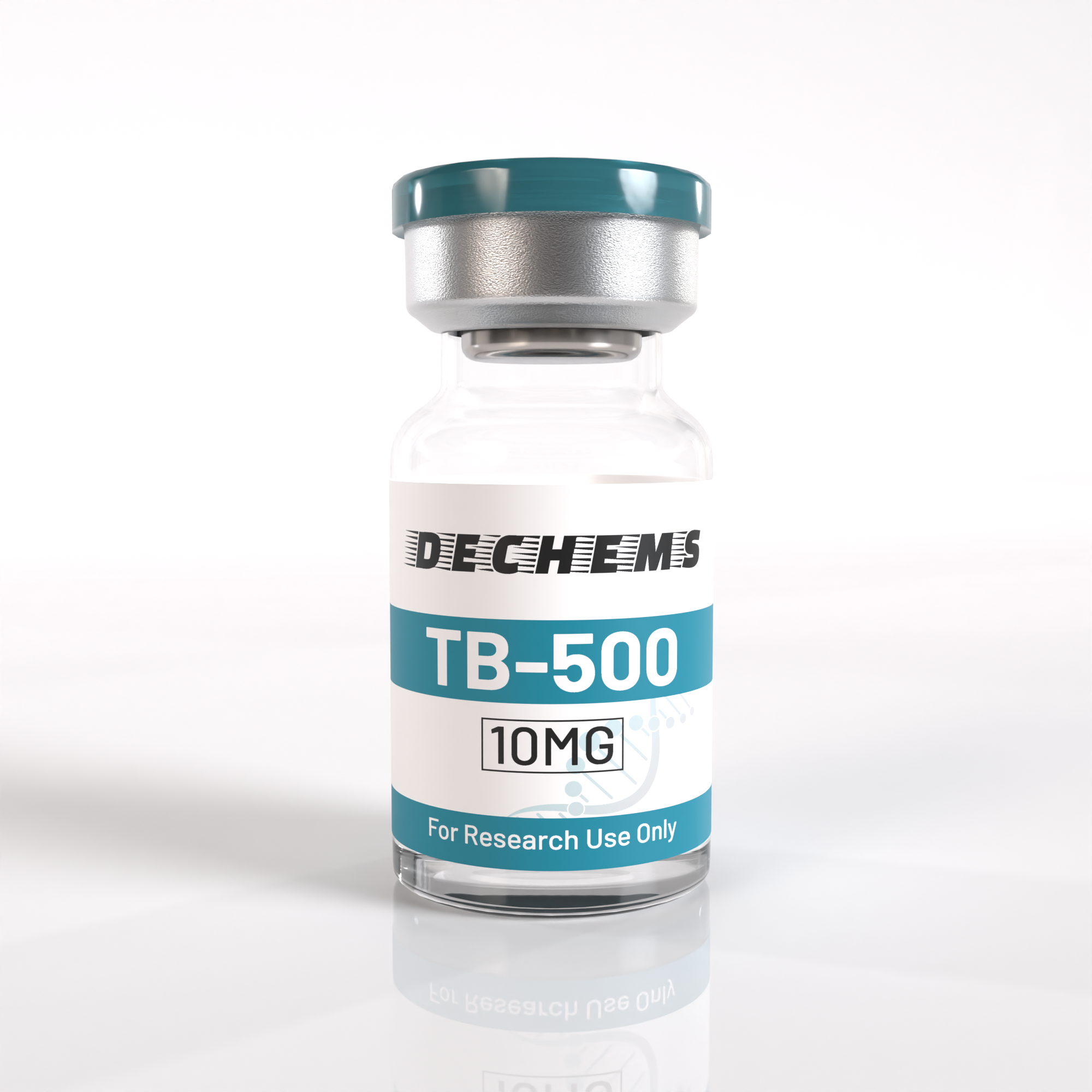

TB-500 10MG

Categories:

TB-500 (10 mg) is a synthetic peptide designed for laboratory research applications. Derived from bovine tissue, it has been studied for its potential role in cellular repair and regeneration mechanisms. This peptide is intended for use in controlled scientific environments only.

$72.00

Satisfaction Guaranteed

Secure
Payment

Third-party
Tested

Research Use Disclaimer

Every serious peptide company prominently displays this. Example Research Use Only All products offered by Ascend Biologics are intended strictly for laboratory research purposes. Products are not for human consumption and are not intended for diagnostic, therapeutic, or medical use. By purchasing from our website, customers confirm they are qualified researchers or laboratories and understand the intended research-use designation.

TB-500 10MG

TB-500 is a decapeptide derived from bovine collagen, initially studied for its potential role in tissue regeneration and wound healing in experimental animal models. This peptide fragment is part of a broader class of compounds known for modulating cellular processes at the protein level.

Research Context

TB-500 has been investigated in preclinical studies for its potential biological effects in animal models. It is hypothesized to exert its actions through interactions with cellular receptors and signaling pathways that influence extracellular matrix (ECM) remodeling, tissue repair, and regenerative processes. Research focuses primarily on its application in scenarios where rapid tissue regeneration is studied, including wound healing and potential musculoskeletal support.

Research Overview

TB-500 has been studied in rodent models for its effects on tissue regeneration, particularly in wound healing and the repair of damaged tissues. Early findings suggest that TB-500 may promote increased proliferation and differentiation of fibroblasts, collagen deposition, and enhanced ECM synthesis. Its potential mechanisms may include activation of specific intracellular pathways that contribute to accelerated healing processes.

Key Research Focus Areas

  • Wound Healing: Investigations in animal models have explored TB-500’s role in facilitating the wound healing process by accelerating the formation of new tissue and reducing scar formation.
  • Tissue Regeneration: Research has examined TB-500’s potential in promoting regeneration of musculoskeletal tissues, including cartilage and bone, through modulation of extracellular matrix components.
  • Inflammation and Cellular Signaling: Studies have assessed TB-500’s impact on inflammatory responses and signaling pathways that influence cellular behavior during tissue repair.
  • Metabolic and Repair Pathways: Investigations have focused on TB-500’s involvement in pathways that regulate cell proliferation, differentiation, and ECM remodeling in experimental models.

Important Note: TB-500 is intended solely for research purposes and is not intended for human or animal therapeutic, diagnostic, or cosmetic use. Its effects and applications are subject to ongoing investigation in controlled experimental settings.

For research use only. Not for human or animal consumption.
Lorem ipsum dolor sit amet, consectetur adipiscing elit. Ut elit tellus, luctus nec ullamcorper mattis, pulvinar dapibus leo.

At Hollywood Peptides, we provide more than just industry-leading compounds; we provide the certainty and excellence required for groundbreaking results. We recognize that in the world of science, there is no room for error. That is why every formulation we offer is subjected to stringent validation and certification protocols.
 
Lab Report
Date Added :
03/15/2026

TB-500 10MG

TB-500 is a decapeptide derived from bovine collagen, initially studied for its potential role in tissue regeneration and wound healing in experimental animal models. This peptide fragment is part of a broader class of compounds known for modulating cellular processes at the protein level.

Research Context

TB-500 has been investigated in preclinical studies for its potential biological effects in animal models. It is hypothesized to exert its actions through interactions with cellular receptors and signaling pathways that influence extracellular matrix (ECM) remodeling, tissue repair, and regenerative processes. Research focuses primarily on its application in scenarios where rapid tissue regeneration is studied, including wound healing and potential musculoskeletal support.

Research Overview

TB-500 has been studied in rodent models for its effects on tissue regeneration, particularly in wound healing and the repair of damaged tissues. Early findings suggest that TB-500 may promote increased proliferation and differentiation of fibroblasts, collagen deposition, and enhanced ECM synthesis. Its potential mechanisms may include activation of specific intracellular pathways that contribute to accelerated healing processes.

Key Research Focus Areas

  • Wound Healing: Investigations in animal models have explored TB-500’s role in facilitating the wound healing process by accelerating the formation of new tissue and reducing scar formation.
  • Tissue Regeneration: Research has examined TB-500’s potential in promoting regeneration of musculoskeletal tissues, including cartilage and bone, through modulation of extracellular matrix components.
  • Inflammation and Cellular Signaling: Studies have assessed TB-500’s impact on inflammatory responses and signaling pathways that influence cellular behavior during tissue repair.
  • Metabolic and Repair Pathways: Investigations have focused on TB-500’s involvement in pathways that regulate cell proliferation, differentiation, and ECM remodeling in experimental models.

Important Note: TB-500 is intended solely for research purposes and is not intended for human or animal therapeutic, diagnostic, or cosmetic use. Its effects and applications are subject to ongoing investigation in controlled experimental settings.

For research use only. Not for human or animal consumption.
Reviews

There are no reviews yet.

Be the first to review “TB-500 10MG”

Your email address will not be published. Required fields are marked *

Related Peptides